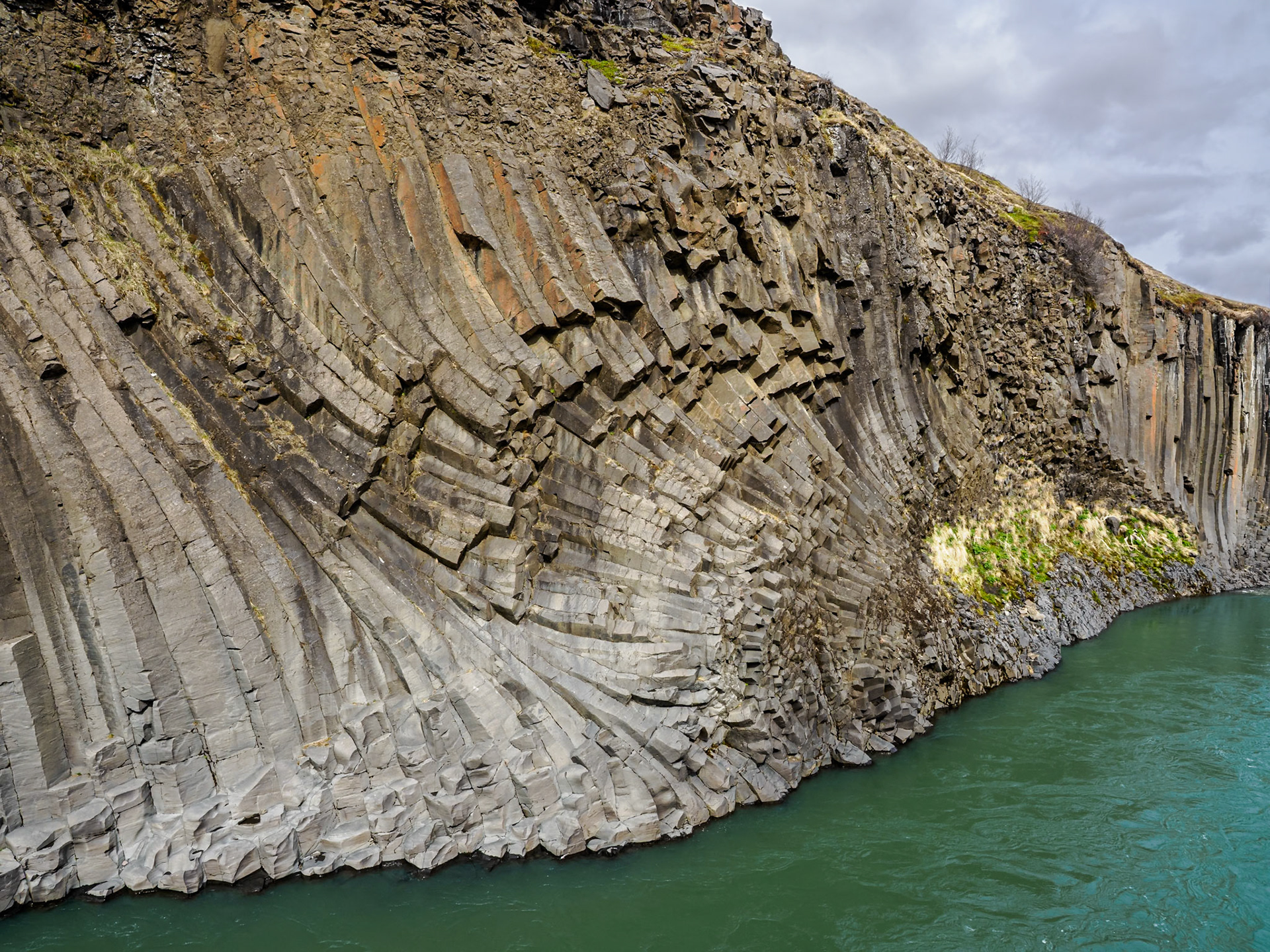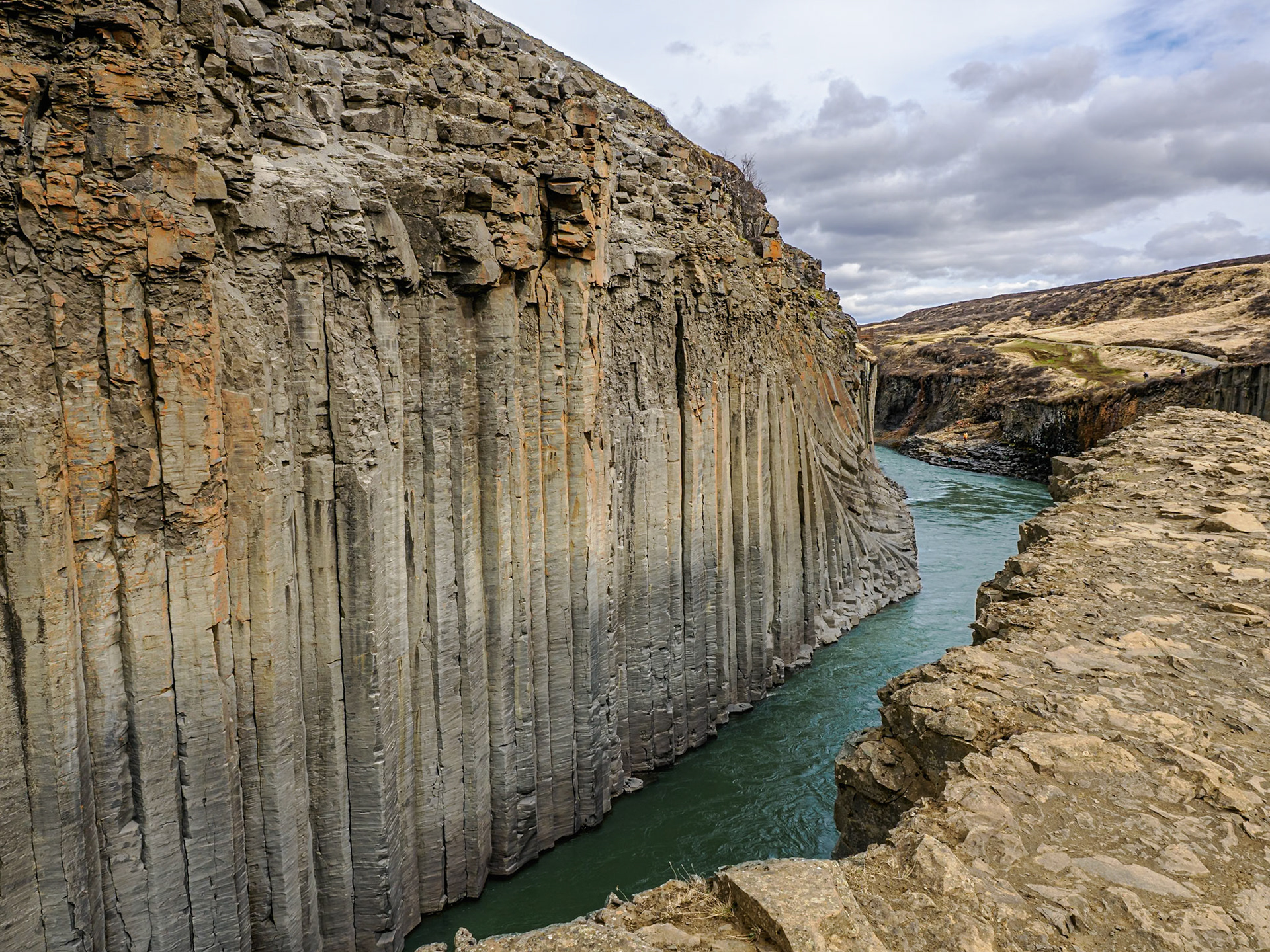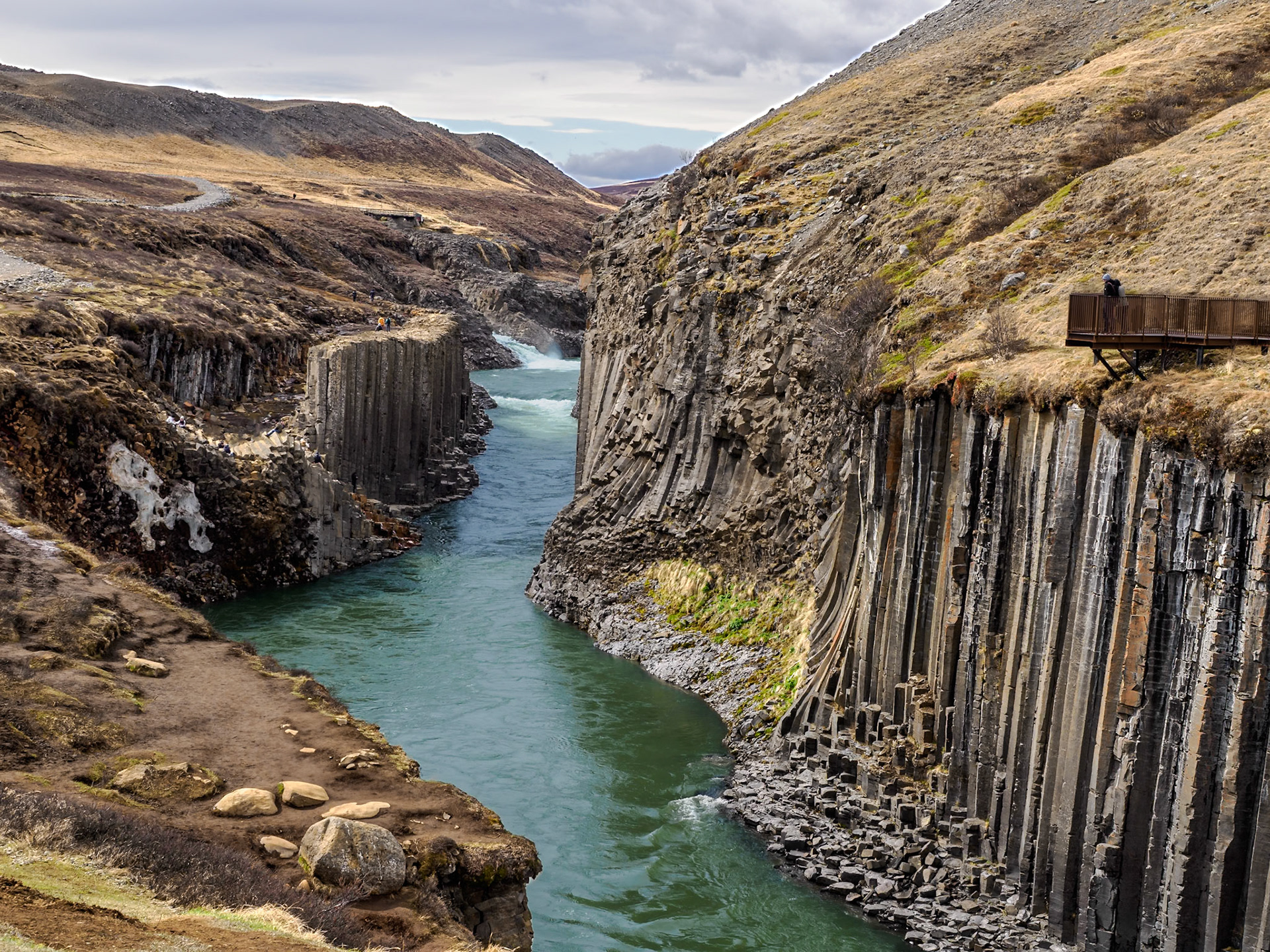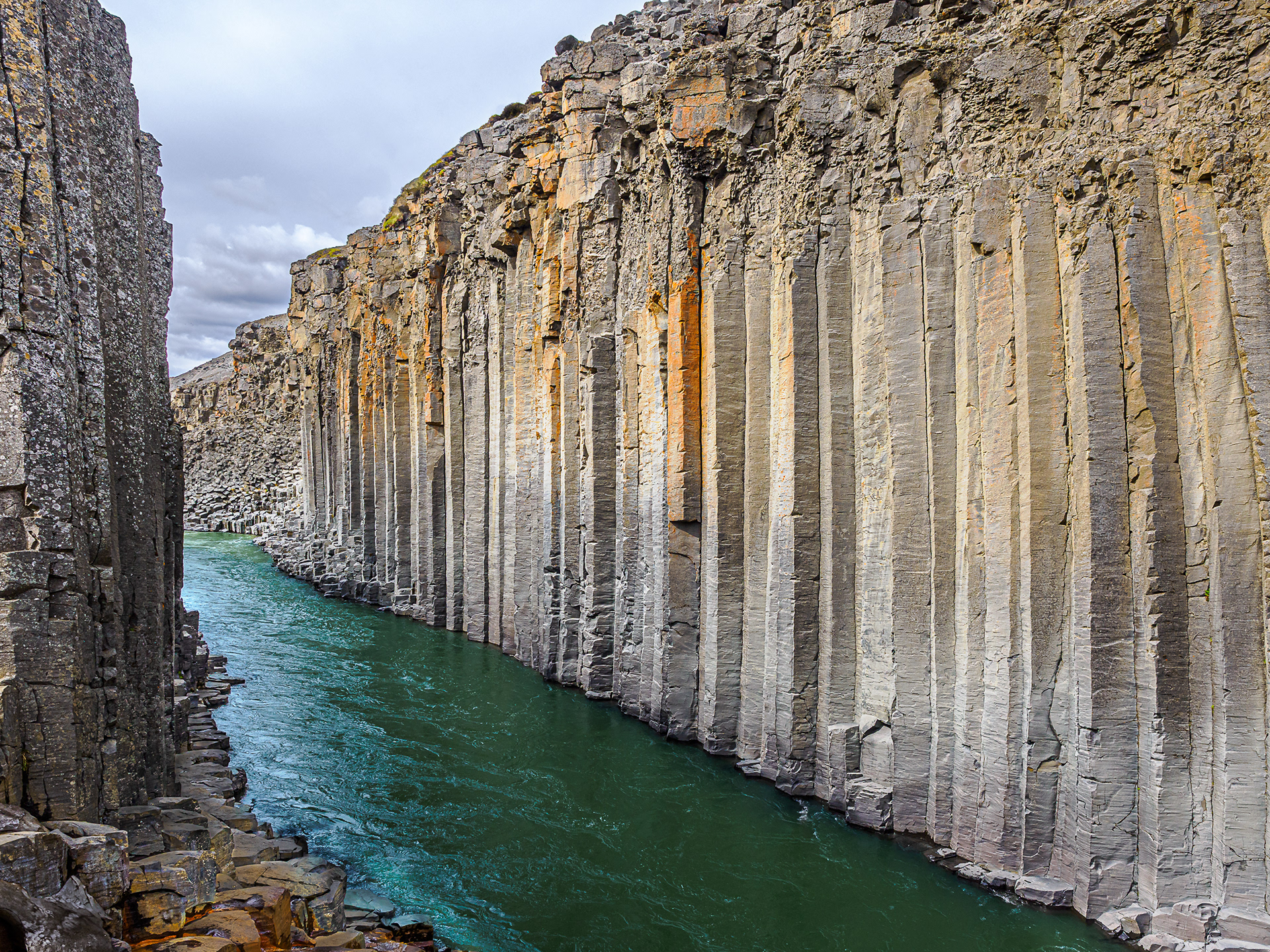
Stuðlagil Canyon - is located in Jokuldalur Valley in East Iceland. For generations, the area was considered too rugged for settlement, with only wandering sheep navigating its terrain. The canyon is composed of hexagonal basalt columns formed by the slow cooling and contraction of thick lava flows during volcanic activity. This type of geological structure is found in several places in Iceland, but Stuðlagil is notable for the height, number, and alignment of its columns. The canyon’s formations rise vertically from the riverbed, with some reaching 10-15 feet in height.
The canyon remained hidden from view until the construction of the Karahnjukavirkjun Hydroelectric Plant drastically lowered the river’s water level. As the rushing glacial waters receded, they unveiled the breathtaking canyon that had been submerged for centuries. The river is a vivid turquoise color during the summer, when the river is fed by clearer water from reservoirs upstream and fine glacial silt is suspended in the water.
Though visible as early as 2006–2007, Stuðlagil remained unknown to the general public until 2016, when an Icelandic photographer and travel writer, Einar Páll Svavarsson, visited the site, photographed it, and wrote the first comprehensive article. He named the site “Stuðlagil” (from stuðlar, meaning basalt columns), mapped it on Google Maps, and secured permission from local landowners before publishing. Stuðlagil Canyon is now one of the most popular tourist attractions in the Eastern Region of Iceland.